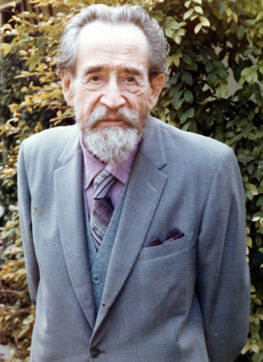
Dane Rudhyar

Dane Rudhyar

Lineage

Dane Rudhyar

Paris, 23 March 1895 — San Francisco, 1985

Composer, poet, painter, novelist, essayist and philosopher, Dane Rudhyar is the founder of humanistic and transpersonal astrology. Samuel joined him in California, translated his books and was granted his friendship until his final days.
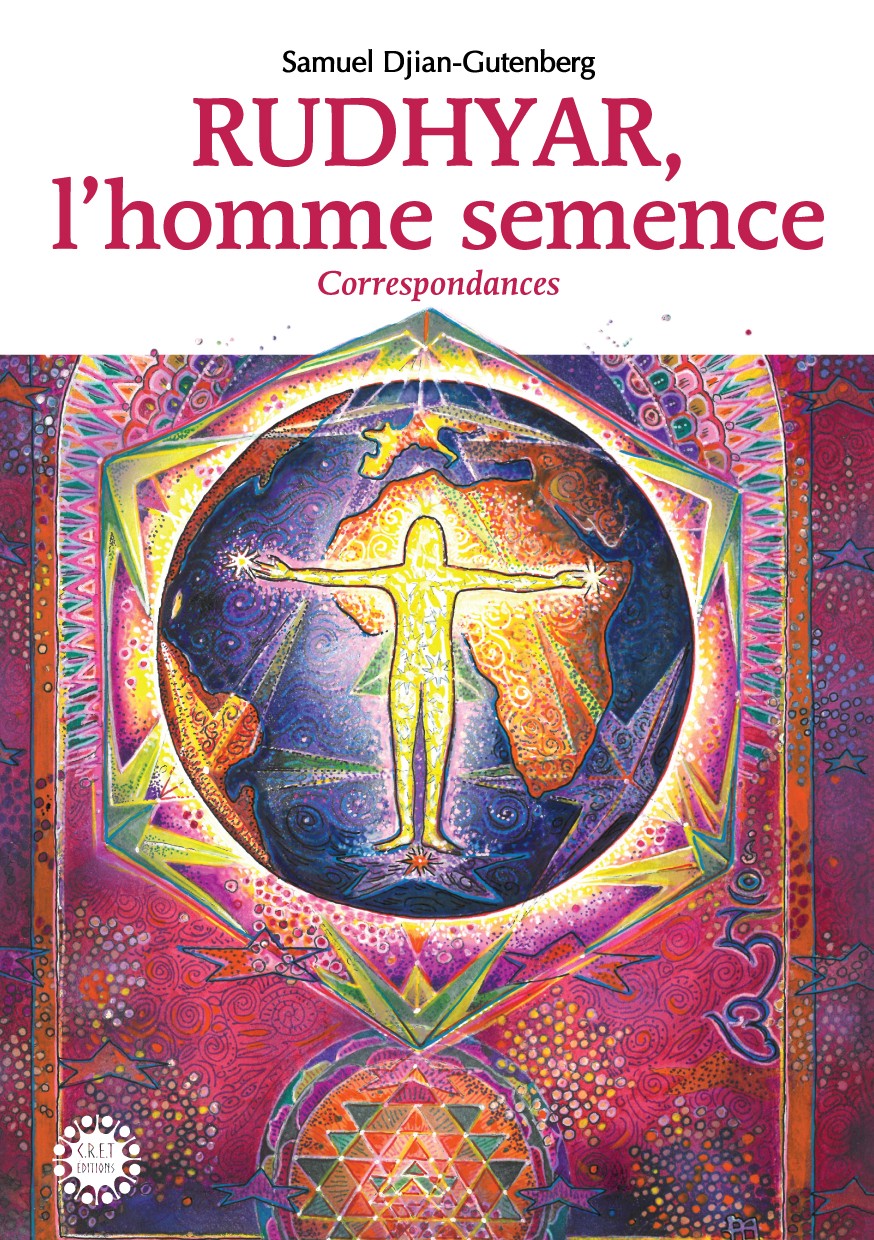
L'Homme-Semence — correspondence with Dane Rudhyar
Coming soon

L’Homme-Semence

A forthcoming book gathering the complete correspondence between Samuel Djian-Gutenberg and Dane Rudhyar.

Dane Rudhyar in 1982, in his garden in Palo Alto, California (photo Samuel Djian-Gutenberg). Dane Rudhyar was born in Paris on 23 March 1895, at 0:40. At the age of 21 he emigrated to the United States, which were for him the virgin soil on which the “New World” could emerge. Through his work as composer, poet, painter, novelist and essayist, he devoted his life to sowing the seeds that would allow this new consciousness to be born. Astrology is a primary support of the philosophy he elaborated — a philosophy that is a synthesis of Western thought integrated into a thorough study of Eastern and occult approaches. Jung’s depth psychology, as well as humanistic and transpersonal psychology, also find their place in his thinking. Rudhyar’s philosophical and astrological work is abundant. Its major theme is the evolution of Man toward an ever-greater consciousness of himself and of the Universe, until reaching a transpersonal state — a state that transcends his personality (ascending movement). At the same time, this personality has become so “translucent” that it is able to channel the Spirit into matter and thus illuminate the latter with a sacred meaning (descending movement). Dane Rudhyar died in San Francisco in 1985.

Discovering Rudhyar

It was Germaine Holley who first spoke to me of Dane Rudhyar, in 1978. Later, I realised that Henry Miller had mentioned him in some of the books I had read in 1972-73. But it had escaped me, or had lodged itself as something self-evident in a corner of my memory. When I came to know Germaine Holley, in that same year 1978 — marked in my birth chart by important transits and progressions and a very significant Solar Return — one of her Swiss friends (Switzerland plays a great role in my personal life, another coincidence with Germaine Holley and Charles Vouga, which is normal, after all, for a Mars ruling an Ascendant in Virgo… like Germaine, “the most tiresome of Marses!” as she used to say), Yvonne Anex-Genoud, was working on the French translation of Rudhyar’s first book, The Lunation Cycle. I thus had the chance to read the manuscript of the translation, and that is how I made contact with Rudhyar’s thought. This book carried me once more toward astrological and metaphysical summits as high as Everest. Madame Holley then told me that, given my studies and my turn of mind, Rudhyar would certainly have a great deal to bring me. She gave me the few books, in English, that she had in her library, some annotated by Vouga. It was like sweet milk poured into my consciousness, and I felt I was constantly pushing back the horizon of my knowledge. That year 1978 was marked for me by a prodigious opening: the meeting with Germaine Holley and the teaching she gave me personally or through the groups that gathered around her, the discovery of Rudhyar, my first journey to India and the teaching of Paramahansa Yogananda, my beginnings as an astrological consultant… During the summer of 1979, while I had stayed at Varengeville with Germaine Holley after the workshops, I realised that, from Dieppe, I was only a stone’s throw from England and London, where I could no doubt find more of Rudhyar’s books. One misty early morning, I drove to Dieppe in Madame Holley’s old Renault 8 and embarked for Newhaven. As the ferry took the road to Albion, an episode of Henry Miller’s life came back to me — he made this same crossing in the 1930s (Via Dieppe-Newhaven, in the collection of stories Max and the White Phagocytes). I returned from London with all of Rudhyar’s books, my heart rejoicing, athirst. Immediately, as I read, I applied the understanding Rudhyar brought me to my own life, and it appeared to me full of a meaning I did indeed perceive, but which took its full measure with the notion of cycle, for example — particularly the progressed Lunation Cycle. The Sabian Symbols brought a new light, rich in perspective. The link Rudhyar made with the psychology I was studying in depth at the same time, as with all the Eastern and Western spiritualities in which I had been immersed since 1972, allowed me to integrate, in a “holistic” way, all the research and studies I had been able to do since I had been on the quest — in fact since my childhood! My life was ordering itself. Reading Birth Patterns for a New Humanity (later translated into French as L’Histoire au rythme du cosmos), I was able to make the link between my studies in Political Science at university and astrology. What had called me, when I undertook those studies, was the need to understand the place of man in the world, his place in society, the evolution of societies and the way they could live according to specific social and economic choices. I hoped that this understanding would help me to work better so that each person might be in their rightful place and contribute to the good running of community life, in respect of differences, in a spirit of justice and sharing. This need to take part in the emergence of a new form of society and of new forms of human relations had inhabited me since childhood, and it is what later pushed me to go to Findhorn, where an experiment in new living was under way, and then to found, with other seekers, the Groupe de Lucinges in Haute-Savoie, whose mission — in my mind at least — was to bring this new type of relationship concretely into being.

A few words on Rudhyar’s work

With the socio-political approach founded on a spiritual understanding of the universe and of man that I found in Rudhyar, this dimension I was seeking, at every level, was present and clearly formulated. One must not forget that Rudhyar was not in reality an astrologer, contrary to the reductionist idea some astrological circles have of him. He was a thinker, a philosopher, a visionary of a new world, and he sought to give that vision different modes of expression on the many planes in which each of us evolves — physical, emotional, mental, spiritual. Music (he was originally a composer), poetry, the novel, painting, the essay and, of course, astrology, were for him tools through which he could illustrate his vision. This is why his major writings are not books of astrology but “metaphysical” books, and no one can truly approach his astrology without having read them first. Let us mention chiefly The Planetarization of Consciousness, Occult Preparations for a New Age, and Beyond Individualism. And if one were to read only one of these books, one should read his philosophical testament, The Rhythm of Wholeness, published in English in 1983 and in French a little later. Rudhyar dedicated the book to me when it came out: “For Samuel, that his life may unfold in rhythms of wholeness and peace. Dear Rudhyar, thank you for your wish, which has accompanied me ever since I met you. And if I do indeed feel, with the years, that my life follows the rhythm of wholeness, I know that the attainment of peace and serenity is the fruit of a long path. But the further I advance, the more the periods in which they manifest grow in amplitude… In relation to the more social vision evoked above, Rudhyar wrote a number of books, among them Directives for a New Life, The Rhythm of Human Fulfillment and, particularly, Culture, Crisis and Creativity (untranslated into French).

Contact with Rudhyar

When Germaine Holley introduced me to Rudhyar, none of his books had been translated into French. The Lunation Cycle was, in 1978; most of the others from 1982-83 onward. I had only just learned, during my journey to India, to read English properly, and reading Rudhyar contributed to enriching my knowledge of that language. It was precisely in English (laboriously!) that I wrote my first letter to Rudhyar. Seeing my enthusiasm and the speed with which I assimilated the concepts Rudhyar had elaborated, Madame Holley suggested I write to him. “You know, he will be very happy to learn that young French astrologers are interested in his work and are spreading it as you now do.” She had been in contact with Rudhyar for years; she had met him at astrology congresses in the United States and they had become friends, linked by the French language. She therefore gave me his address, but I waited some time before writing to him. I did not dare to disturb the man who had become for me my master in astrology. I took advantage of the year-end holidays, in 1979, to send him my good wishes and to thank him for what he had brought me. To my great astonishment, he replied, and so a regular correspondence began. He suggested, moreover, that I write to him in French while he wrote in English. In those years, Rudhyar was almost unknown in France, and only The Lunation Cycle had been translated. As I wished at all costs to make him known and to share the enthusiasm and immense vision he inspired in me, I gave monthly lectures at the Centre Galande, in the 5th arrondissement, which attracted many people in search of another consciousness around Claude-Marc Perrot, who was my analyst. Through Germaine Holley, I had also made the acquaintance of Annick Gignoux, who ran the Librairie de Médicis as well as the publishing house of the same name. When I spoke to her of Rudhyar, I told her that within a few years he would be considered the essential astrologer of the 20th century. (In fact, I was mistaken in a way: he was so far ahead of the evolution of consciousness that few astrologers, in this scientistic century, could really grasp his true dimension. So he will, for sure, be the astrologer of the 21st century!) In any case, Annick trusted me and asked me to name, among Rudhyar’s books, those that seemed to me to deserve translation first. The choice was difficult, for all the books seemed essential to me. But I finally chose five titles: The Practice of Astrology, The Astrology of Personality, The Sabian Symbols, An Astrological Study of Psychological Complexes and Astrology and the Modern Psyche. Annick offered me the first to translate and I set to work at once. But, for certain reasons, the project could not come to fruition. This incident then decided me to leave for the United States, for what mattered most to me was to meet my master and to spend time with him before he left his body.

California

And so I landed in Los Angeles in July 1981, after having first made, through an unexpected concourse of circumstances, a six-month detour to India. In the taxi that took me from the airport to downtown, the radio played Scott McKenzie’s song “San Francisco (If You’re Going to San Francisco)”, which had marked, with many others, a certain period of my life: California, and particularly San Francisco, were then the place of the “counter-culture”, of the “underground”, and many things that happened in the “sixties” and reached us in France through the magazine “Actuel” were not unconnected with the fact that I suddenly found myself at the source of what I had become. One must not forget that Rudhyar was discovered by this counter-culture and, during that period, was a figure of intellectual authority, like Alan Watts or Ram Dass (the American, the defrocked academic — not Swami Ramdas, the author of the wonderful In Quest of God), for example. Later, I had the chance to talk with Rudhyar and his wife, Leyla Rael (who, born the same year as me, had taken part, in her own way, in that dynamic), and both spoke to me of the effervescence and the impact of that movement on America’s awakening of consciousness. One of the consequences of the counter-culture was the emergence of the New Age movement. At the moment I arrived in the United States, the New Age was beginning, and Marilyn Ferguson’s book The Aquarian Conspiracy had become a kind of manifesto for it. Rudhyar was aware of, and at the heart of, all this, and he spoke to me of it very clearly. He was very interested in what was happening — he abundantly evoked the Age of Aquarius in his works — and at the same time he was very reserved. Beyond the richness the movement was bringing forth, he was very conscious of the excesses it carried within it. He was one of the first, not to denounce it, but to warn its followers against the dangers to come. Contrary to what some would have us believe, the New Age was a rich movement in its beginnings, and it corresponds to a stage in the consciousness of evolution… I had warned Rudhyar of my arrival, and he had answered that he and Leyla Rael would be happy to receive me. I had been in Los Angeles a month when Leyla contacted me to say that Rudhyar was ready to receive me. So I went to San Francisco, full of wonder at discovering the city of the “blue house”. And even though the era of the sixties was over, Frisco and the whole “Bay Area” hummed with that fantastic life of the meeting between East and West, with all that abundance in every field. There was good and less good, and since Spain had left its imprint on the region, one could say it was a “Spanish inn” — what you bring is what you find…

First meeting with Rudhyar

Just as had happened to me some time earlier with Germaine Holley, I lived in a kind of altered state in expectation of the meeting. Beyond Individualism had just come out, and reading it only intensified my inner ferment. San Francisco is a magnificent city, and its prestigious setting has served as the backdrop for many films and television films. Its climate is quite particular, and moments of great heat alternate with moments of opaque fog. When the fog descends on the city, one had better be warmly dressed, otherwise it creeps into one’s skin. In my mind, before landing in SF, I thought it was always full sunshine there. So I had to acquire a coat to face the fog. On the morning of my first interview with Rudhyar — I had an appointment in the early afternoon in Palo Alto, nearly an hour by train from SF — the fog lay over the city. As the train moved away from the city, the sun pierced the mists and, finally, I found myself in a dazzling light and a crushing heat. Sensitive to symbols, coincidences and synchronicities, I could not help drawing the parallel with the encounter I was living. Stations of towns with magical names filed past one after another as the train went down the “Peninsula” toward Palo Alto: Menlo Park, Redwood City, San Carlos… along the famous El Camino Real. Palo Alto, at last. Leyla Rael was waiting for me and, after embracing me in the American manner, the “hug”, she led me to the villa where Rudhyar lived. Although elderly — he was 85 — Rudhyar was tall and slender, slightly stooped. He leaned toward me and embraced me in turn: “Welcome, dear friend”, he said. Intimidated, awed to be in the presence of my master, I jabbered a few words in English. To the various questions he asked me, I stammered, trying to answer with my appalling and incomprehensible accent. After a few minutes, Rudhyar said to me, in French: “Do speak in French — your English is incomprehensible!” From that moment, all our conversations — to my great relief — took place in French.

With Rudhyar

Shortly after this first meeting, I settled in San Carlos, not far from Palo Alto, where I went almost every day by bus to spend a few hours with Rudhyar. I arrived around 10 a.m. and we set to work. The aim was to clarify the concepts found in his work so that the future translations of his books would be in tune with his teaching. Likewise, he was keen that certain words be translated exactly as he intended. For example, in certain contexts, he asked that mind be rendered by mentat. He explained to me that, if I wished to understand the meaning of his teaching well and not commit misinterpretations in a translation, I should read the theosophists, notably Annie Besant and Alice Bailey. Although his vision of the world differed in certain respects from that of the theosophists or Alice Bailey, fundamentally there was a link between them. He told me that he had known Alice Bailey well. She encouraged him to write his first book, The Astrology of Personality, which she had published, in 1936, by her own publishing house, the Lucis Trust. I had already approached the theosophists on my own, and I began to read Alice Bailey, which indeed allowed me to situate Rudhyar’s thought better. This knowledge served me to translate as well as possible two of Rudhyar’s books that Annick Gignoux offered me to translate when I returned definitively to France in 1983: An Astrological Study of Psychological Complexes and Astrology and the Modern Psyche. Above all, I was better able to transmit my master’s teaching correctly through the workshops, lectures and seminars I gave from that date, as well as in the articles I wrote for many magazines. My stay in California was divided between the visits to Rudhyar, the meetings with the other disciples of Paramahansa Yogananda, the discovery of the New Age current, and a deepening of my research in every field. Often, on my way back from Rudhyar’s, I would stop in Menlo Park to spend hours in the East-West Bookshop, where I found treasures unknown in France. With Rudhyar, we made a pilgrimage to Big Sur, which I recount in an article published in the magazine “D’Âmes et d’Hommes”: “From Henry Miller to Dane Rudhyar”.

Return to France

After a few months, I wanted to return to Paris to settle my affairs and come back to live definitively in California. I thought I would make a round trip and stay a fortnight at most in France. I told myself that, while I was at it, I could take advantage of this stay to give a lecture on Rudhyar and perhaps do a few consultations. When I had left for India and then the United States, two years earlier, I had left my clientele — which had nonetheless become substantial — and I thought that after such a long absence I would have to start again from scratch if ever I wanted to re-establish myself in Paris. I asked my friend, the psychoanalyst Claude-Marc Perrot, to organise a lecture for me at the Centre Galande, which he had created many years earlier. Before my departure, I worked as an astrologer within this association, which was a pioneer in the field of personal development as it is understood today. When I arrived in Paris for this lecture, I was astonished by the crowd waiting for me in the small apartment on the rue Valentin-Haüy, the association’s headquarters. In the room that served as a place for lectures, classes or workshops, people were pressed against one another; some had not been able to get in and had gathered in the corridor. Overcoming the shyness that has always inhabited me — I had, especially at that time, to make a violent effort on myself to come out of my Twelfth House, but my faith carried me outward — I launched in. Gradually, I was carried away by my enthusiasm, and I felt the people before me completely in resonance with what I was saying, and the vision I offered of Rudhyar seemed to meet with assent. When I had finished, after the fiery reading of a passage from Directives for a New Life, the room burst into applause. Never, until then, had I felt so strongly what it meant to “be a channel”. That evening, not only had I truly put myself in the service of Rudhyar and of the evolution of consciousness, but I had also discovered that I was myself. The demand for consultations, classes and seminars was such that I stayed three months in Paris to meet it. I knew then that my place was there, in France, and that the United States was above all a place of renewal and discovery. I made these shuttles between Paris and California twice more, devoting my time to Rudhyar when I was across the Atlantic and to my work as an astrologer when I was in Paris. At the end of 1982, I returned definitively to France, and then my work of spreading Rudhyar’s thought and of teaching really began. Pascale Bergeron, who had just created her school of astrology in Lyon, asked me to come and teach at her place. A whole movement, more or less linked to the dynamic of the New Age, developed across France and Europe, and centres for workshops and places for teaching all sorts of personal-development disciplines were created here and there. For my part, I collaborated with Corps et Énergie, run by Evelyne and Alain Chevillat, who were also at the origin of the magazine “Sources”, which informed on all these subjects and, above all, made a link between the teachings of the East — particularly of India — and the West. I naturally found my place in this approach. (As an aside, Alain and Evelyne later went to India for a time and, when they came back, created “Terre du Ciel”.) Until his death, in 1985, I remained in epistolary contact with Rudhyar and continued to benefit from his precious advice. Today, he is more present within me than ever, as are Germaine Holley and Charles Vouga. Even though I eventually found, with Transpersonal Astrology, my own mode of expressing what they transmitted to me, I am faithful to them as in India a disciple is to his masters.